Which Is a Specific Immune Response Apex
Cytotoxic helper and suppressor T cells. Ability of an organism to recognize and defend itself against specific pathogens or antigens.

Specific Vs Non Specific Immunity Video Lesson Transcript Study Com
There are two types of Immune Responses both of which are stimulated by specific antigens.

. Figure 2 Antibody. For example the skin and the mucus in the nasal cavity both physically block the entry of pathogens into the body but they do not specifically target certain antigens. It cannot create a memory so if a specific pathogen entered the body again it would restart the process and kill the pathogen which will create a slow response each time.
The Immune Response The Immune Response Immunity. An immune response is a reaction which occurs within an organism for the purpose of defending against foreign invaders. The immune response can be either innate or adaptive.
Cell-Mediated Immunity CMI - This response is produced by T cells. Up to 24 cash back Immune activity then rises levels off and falls. Up to 10 cash back The two types of immune system responses are innate nonspecific and adaptive specific.
Defence mechanisms of the non-specific immune response include. When an antigen is detected by a macrophage as describe above under phagocytosis this causes the T-cells to become activated. The activation of T-cells by a specific antigen is called cell-mediated immunity.
Specific immunity is acquired. Most microbes can only infect certain species Most specific immune responses improve with repeated exposures to the infectious agent or antigen. The innate immune response is always present and defends against all pathogens.
Involves production of antibodies and generation of specialized lymphocytes against specific antigens. Acquired immunity can be categorised as natural or articificial. This process is a targeted or specific immune response.
Here are the steps in an immune response. Cellular - T lymphocytes and activated macrophages. In contrast subsequent or secondary immune responses.
T cells are a key component in the cell-mediated responsethe specific immune response that utilizes T cells to neutralize cells that have been infected with viruses and certain bacteria. Adaptive specific Immunity Bio 139 Dr. Up to 24 cash back Non-specific immune responses work against all pathogens or non-self cells.
Innate responses are those that act on many pathogens in the same general way. Amy Rogers Adaptive Immunity Host defenses that are specific to a particular infectious agent Can be innate or genetic for humans as a group. The Adaptive Arm of the Immune System Specific Immune Response Internal defense against a specific pathogen Acquired as you are exposed to diseases The immune system learns Memory cells remain for every pathogen your are exposed to My adaptive immunity is.
Up to 24 cash back 3 levels of the immune system. Soluble proteins produced by B cell they interact with specific antigens. A person is born with the ability to develop a specific immune response against any pathogen within minutes of being exposed to that pathogen.
The immune system also helps the host eliminate toxic or allergenic substances that enter through mucosal surfaces. Up to 24 cash back The Immune system. Two types of immune response.
Each antigen that enters your body has an antibody targeted to it. It is an INDUCED response. A molecule capable of interacting with components of the immune systems antibodies or immune cells.
It is not inherited at birth but acquired overtime due to the exposure to pathogens. The adaptive immune response stores information about past infections and mounts pathogen-specific defense. These invaders include a wide variety of different microorganisms including viruses bacteria parasites and fungi which could cause serious problems to the health of the host organism if not cleared from the body.
Third line of defence. Specific Immune Response The specific immune response begins with the activation of Helper T cells byAntigen Presenting Cells APCs Activated Helper T cells release Interleukin 2 IL-2 that activates other lymphocytes amplification. Also known as an immunoglobulin antigen a macromolecule that reacts with cells of the immune system and which may or may not have a stimulatory effect B cell.
THE SPECIFIC IMMUNE SYSTEM Previously we have discussed the nonspecific defense system that protects us more or less from all pathogens. That is it must be TAUGHT which things to attack. Cells known as lymphocytes which target invaders by producing proteins called antibodies that target specific antigens.
During following exposures to the same antigen the immune system responds much more quickly and reaches higher levels. Natural immunity is acquired by everyday encounters and exposures to disease causing agents and pathogens naturallyunintentionally. Intact skin saliva and tears plus.
Humoral - serum transfer antibodies. Despite the barriers of skin tears and mucus pathogens may still enter the body. The specific immune system or often called the IMMUNE SYSTEM protects us against SPECIFIC NONSELF ORGANISMS and substances.
A person does not have any immune response against a pathogen but develops a temporary specific response to that pathogen that is then forgotten. There are two distinct aspects of the. The body contains millions of different T-cells each able to respond to one specific antigen.
Antigens are foreign peptides capable of. Antibody-Mediated Humoral Immunity - This response is produced by B cells. Because the first or primary immune response is slow it cannot prevent disease although it may help in recovery.
The immune system has evolved to protect the host from a universe of pathogenic microbes that are themselves constantly evolving. Central to the immune systems ability to mobilize a response to an invading pathogen. Up to 24 cash back Specific immune responses refers to the fact that immunoglobulins are produced which are specific to the antigens that stimulated their production this response leads to the production of memory cells which remain circulating in the blood stream should re-infection occur the response would be faster.
There are three types of T cells. A specific immune response that occurs after exposure to an antigen either from a pathogen or a vaccination antibody a protein that is produced by plasma cells after stimulation by an antigen. The third line of defence has a specific response it will respond to a specific pathogen and that is why it recognises self part of the organism and no-self not part of the organism able to.
A non-specific immune response is where the immune. Overview of the Processes Involved in the Immune Response. This line of defence is only in progress if the first and second line of defence have failed.
Third line of defense.
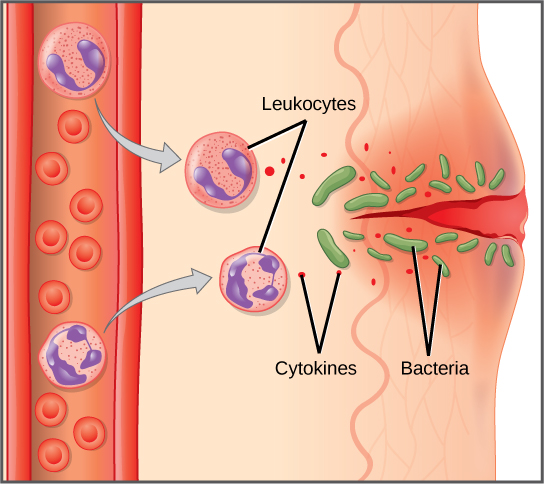
The Immune System Review Article Khan Academy
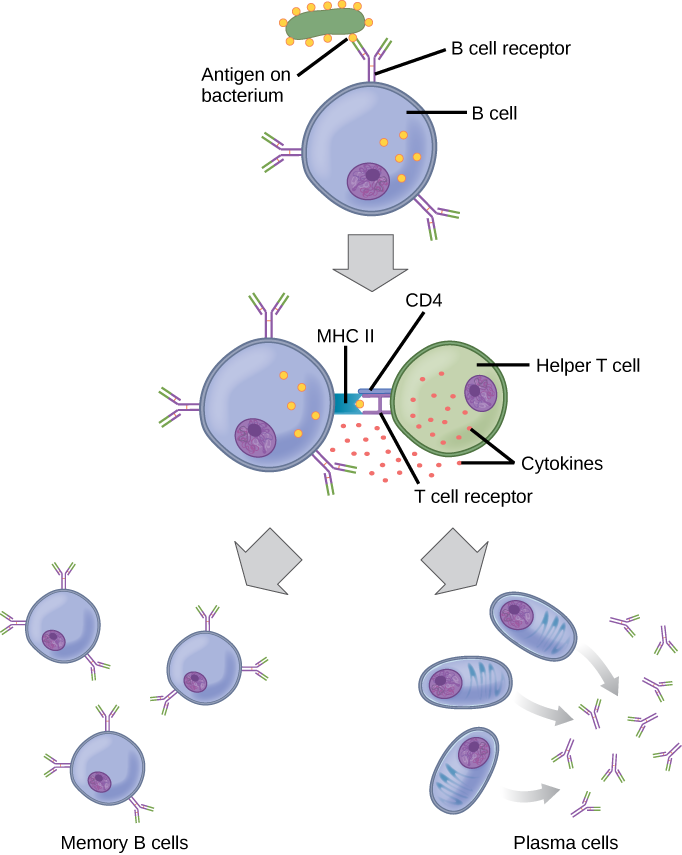
The Immune System Review Article Khan Academy
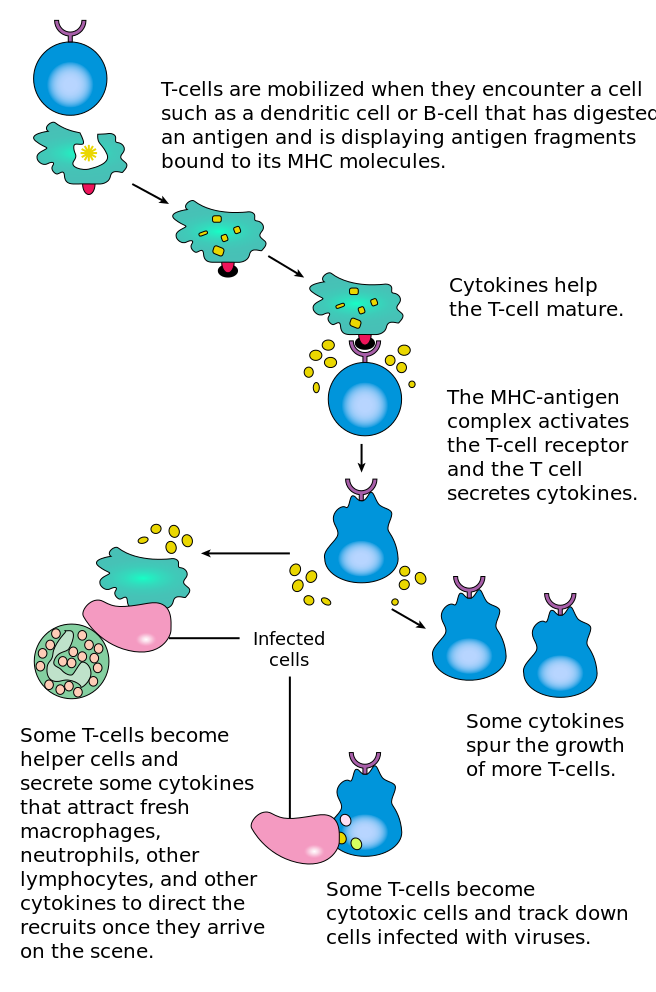
The Immune System Review Article Khan Academy
Innate And Adaptive Immunity American Society For Radiation Oncology Astro American Society For Radiation Oncology Astro


Comments
Post a Comment